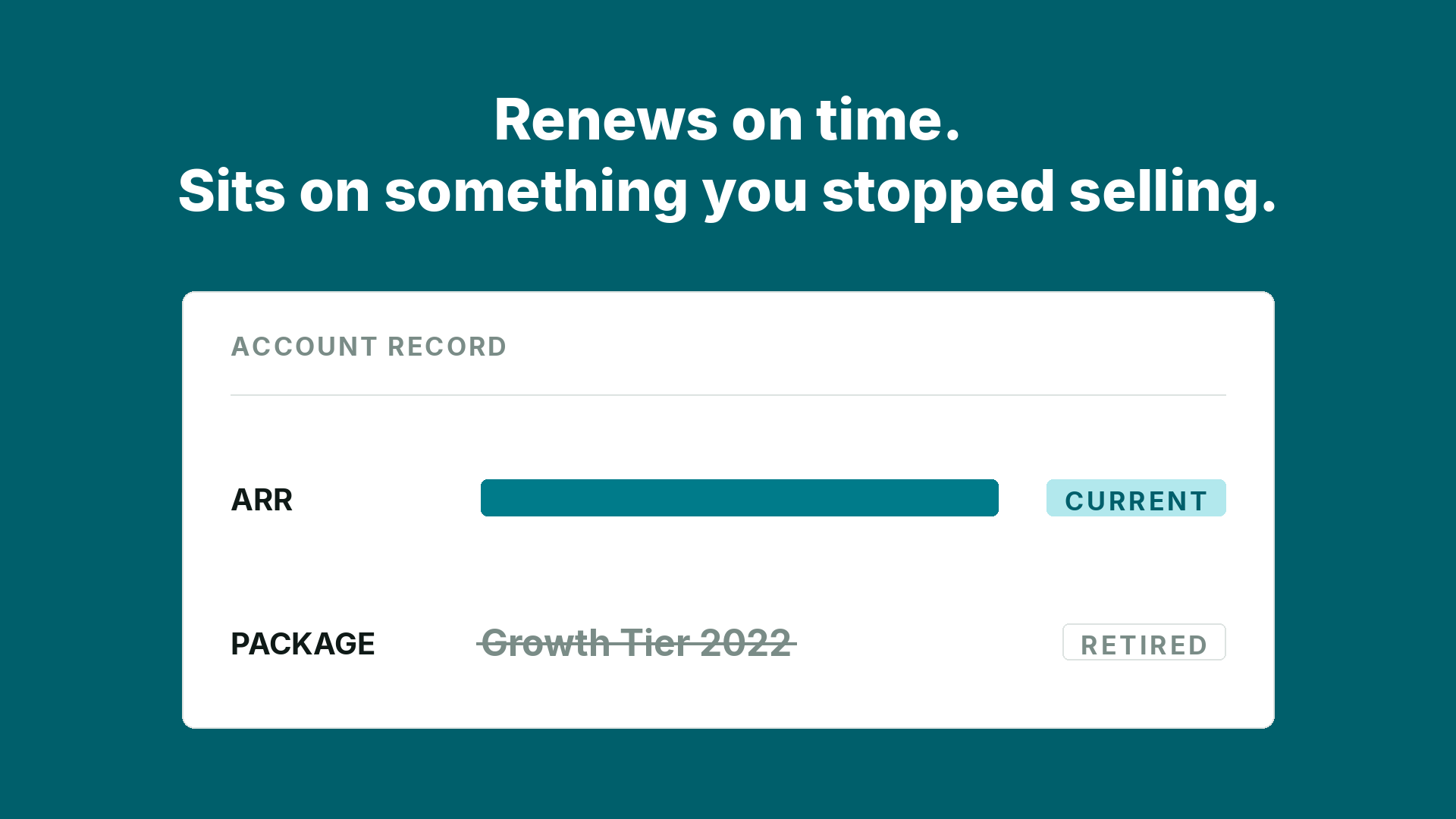
You shipped new packages this year built around AI capability. Almost none of your installed base is on them. They are on the ones you stopped selling.
Insurance and lending have had a word for that for a century. The front book is what you are selling now. The back book is what you already sold, still on the terms you wrote then, still paying, still yours. Software has no word for this. So we talk about it as migration, a project with a start date and an owner, instead of as a book, a position you are holding whether you manage it or not.
Every pricing study published this year measured the front book. Kyle Poyar’s 2026 survey of more than 230 companies found three in four had changed pricing or packaging recently. Careful work, and all of it about what vendors are selling. None of it about what their customers are actually on.
Roughly 70% of AI spend is coming out of existing technology budgets. The money you built the new package to reach is sitting inside accounts you already have, on contracts you already wrote.
Price is not what gets stranded in the back book.
Price moves. A customer renews at +7%, everybody books the uplift, and the account looks healthy in every system you own. What does not move is architecture. That same customer is on a tier you retired, with entitlements your new package has no way to express, under overage language that describes a meter you stopped using. You can reprice that account every year for five years and at the end of it they are still on something you cannot ship your roadmap to. The revenue is current. The structure is frozen.
A customer on that retired tier is not comfortable either. They read your release notes and find the thing they want sitting behind a structure they have no way to buy into. Nothing in your renewal motion offers them a way in.
The gap between the two books widens on its own. Every round of packaging experimentation, every genAI capability you ship into a new tier, pushes the front book further from the back book. What you are selling today is next year’s back book, and it is arriving faster each time.
Some of those customers want to move. The new functionality is worth real money to them and they have budget for it. If you do not build them a path, they will find one somewhere else.
What share of your revenue is riding on packaging you stopped selling, and how long would it take to find out? The back book is not inert revenue. It is revenue in play.