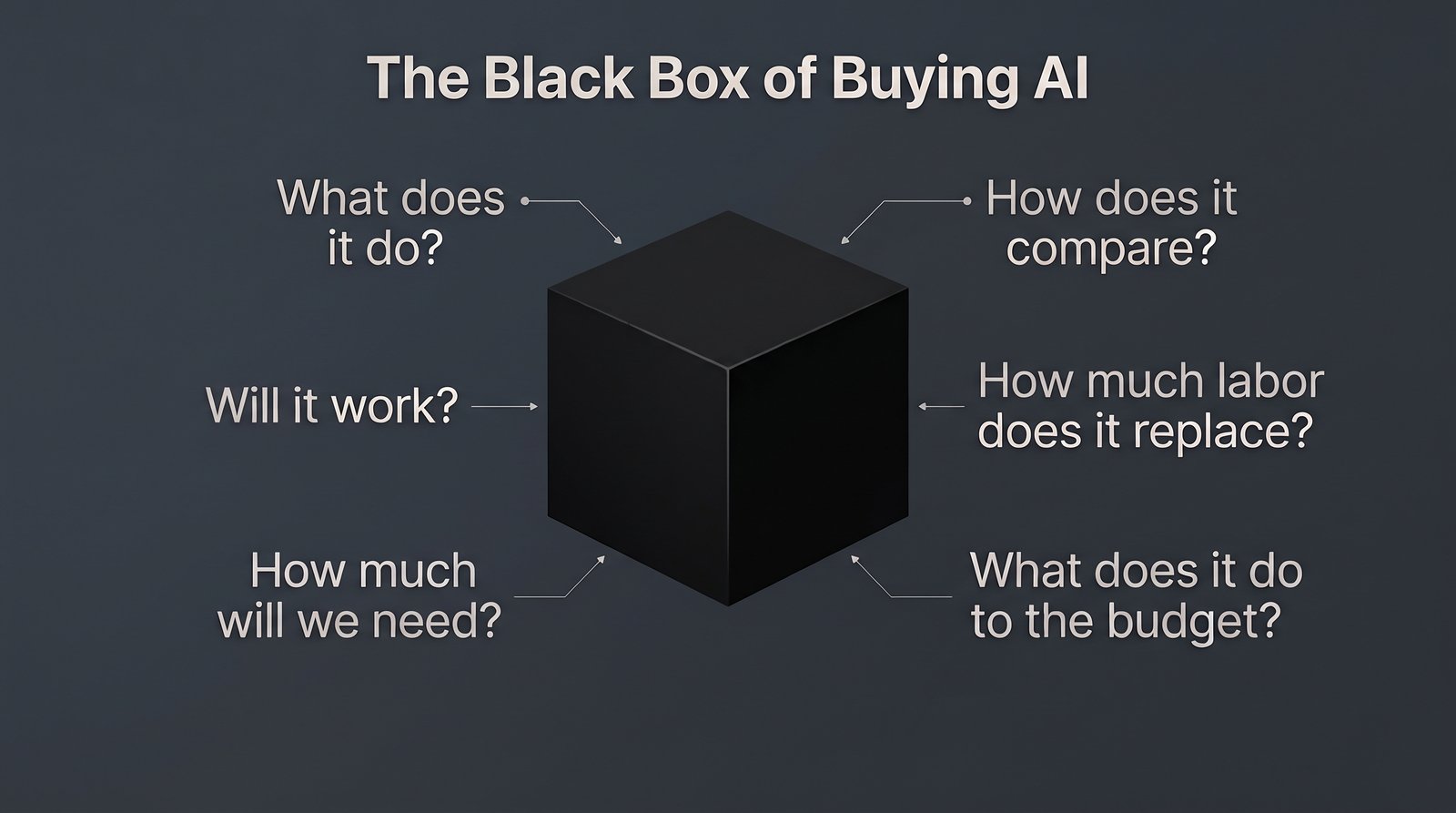
Buying AI software is a black box. Think of all the questions on a buyer’s mind:
- Will this work for my company? Maybe, but I won’t know until it runs on our data.
- How does it compare to the alternatives? Can’t tell. There are no apples to apples comparisons anymore.
- How much will we need? Can’t forecast it.
- How much labor does it replace, and how much human work does it take to support? Nobody knows yet.
- What does it do to my budget? Not sure: last year’s number is irrelevant, the value lands across budget lines, and nearly half of enterprises are over their AI spend already.
So what can a buyer do?
- Admit it. Say openly what you don’t know, to your team and to whoever signs off. Pretending you have the analysis when you don’t is how bad deals get justified.
- Ask the one question you can still answer. Is this clearly better than what we do today? You may never know by how much. Clearly better is enough to act.
- Demand legibility. If the vendor can’t explain what you get, how it works, and what you pay, don’t buy it.
- Test against the real work, and be ready to switch.
If you sell into this market, this is what your buyers are going through. So a demo is no longer sufficient. You have to make buying less terrifying. Provide an offer legible enough that the buyer can understand it without you in the room explaining. Make the test cheap and the exit honest. To win in this market, you have to give the buyer confidence that your black box is the best option for them.