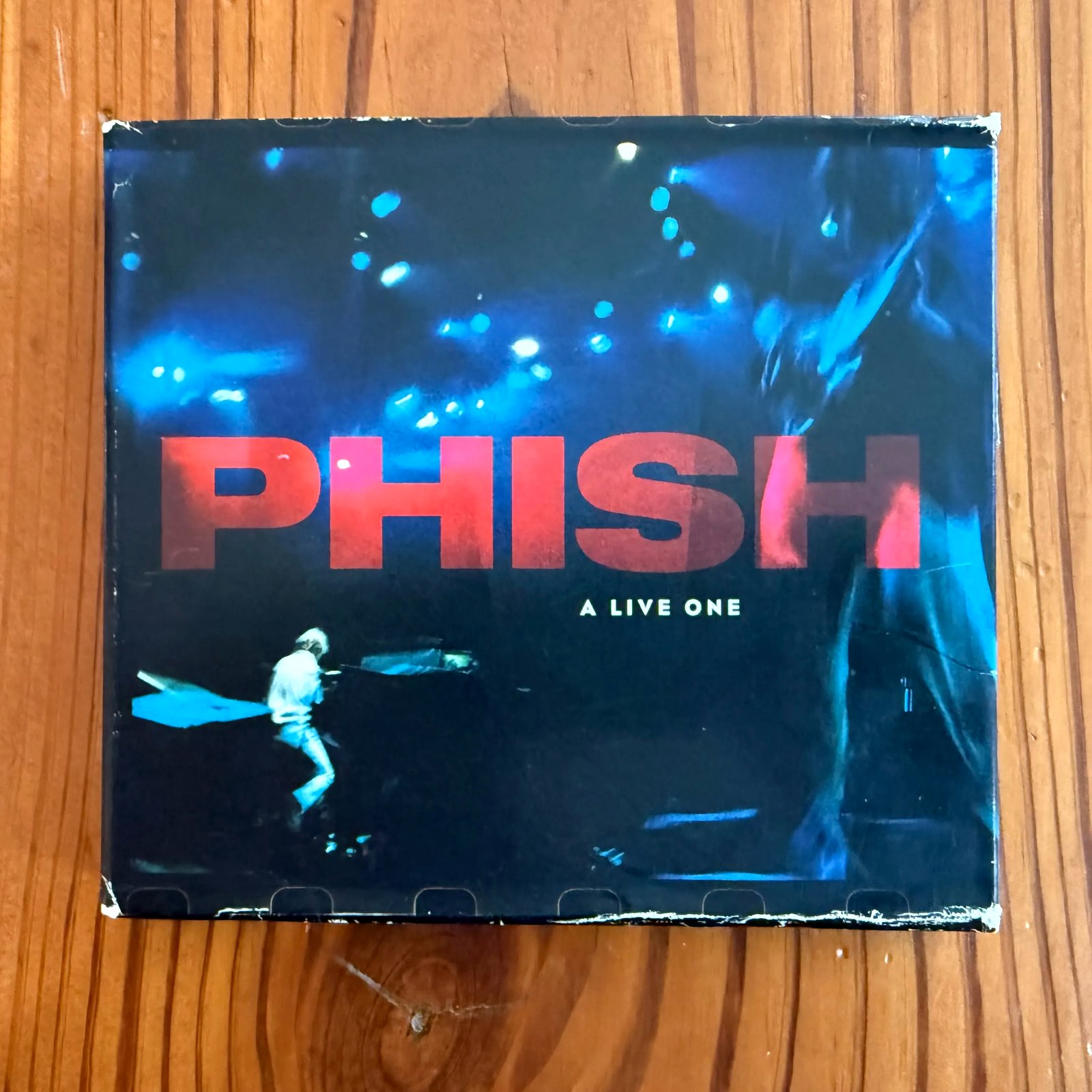
Sophomore year in college, I signed up for Columbia House. I got twelve CDs for one cent plus a couple years trying to unsubscribe from their monthly CD shipments. Three of my twelve were Phish: Rift, Hoist, and a live double album called A Live One. It was 1990s record-industry plumbing, working exactly as designed on exactly the sucker it was designed for.
But A Live One wasn't the typical album. The band went back through a year of their own tapes, each member listing what he'd want to hear again, and came out with a list of more than five hundred song versions to consider. Then they posted to rec.music.phish, the fan newsgroup, and asked everyone there to assemble the live album they'd want to hear. One version of "Stash" made the record because a fan pointed at it. So my favorite Phish album had been sorted for me by strangers. By phans.
I've spent twenty-three years working on how things get priced. Most of my CDs are long gone. I did keep A Live One. And lately I've been pointing my pricing knowledge back at Phish.
Phish let people tape their shows from the beginning, back when that was just a nice thing to do and could not possibly have been a business plan. Four decades on, that decision has produced an expansive catalog — hundreds of versions of every song, all free, all instantly accessible on the Relisten app. A free and endless catalog creates a problem money can't solve: someone has to tell you which of the hundreds is worth your Tuesday night. Streaming services eventually solved this with an algorithm. Phish solved it first, by accident: they let tapers record everything and trade it for the cost of postage, and let the arguing do the sorting.
Take one song — "Bathtub Gin." Ask phans which version is "the one," and they answer: the Went Gin. August 17, 1997, recorded at the Great Went festival in Limestone, Maine. It's the consensus pick, and nobody would look at you sideways for calling it the best thing Phish has ever played. The one time the band put it out, they gave it away as track seventeen of a thirty-four-track free download. This crown jewel in their whole catalog has never been priced.
This should not work. There's an old argument that mechanical reproduction strips an object of its aura — that the copy kills the thing. Phish runs it backward. Every copy is a different night, so the copies never compete with what's for sale. In fact, they're what makes the next night worth anything. The free recordings aren't generosity; they're how you learn a song well enough to hear it become something else in front of you. That is the thing being sold — the song made new, twenty or thirty times a night, bought as one ticket, in a room of phans who can hear it too.
Maybe I'm reading too much into a band just hoping to stay solvent on the road, which is very likely all it was. I doubt any of this was designed. But every choice they've made since lines up so neatly you'd swear someone drew it on a whiteboard. I'm giving them the credit.
Twenty years elapsed between spending that first penny and buying my first ticket. This Friday night in Denver I will see my 150th Phish show. They gave away everything they had, let strangers decide what mattered, and never charged me for the best of it. In return, Phish got 150 nights and counting out of a kid who wanted twelve CDs for a penny.