Software pricing used to be a one-move game. Pick a model, set a price, and coast. Then AI changed the game by introducing new sources of value and new drivers of cost. Alongside that, vendors can't predict how much customers will use an AI-powered product. It's tempting to wait for clarity or to lock in the first clean-looking pricing answer but those are losing moves.
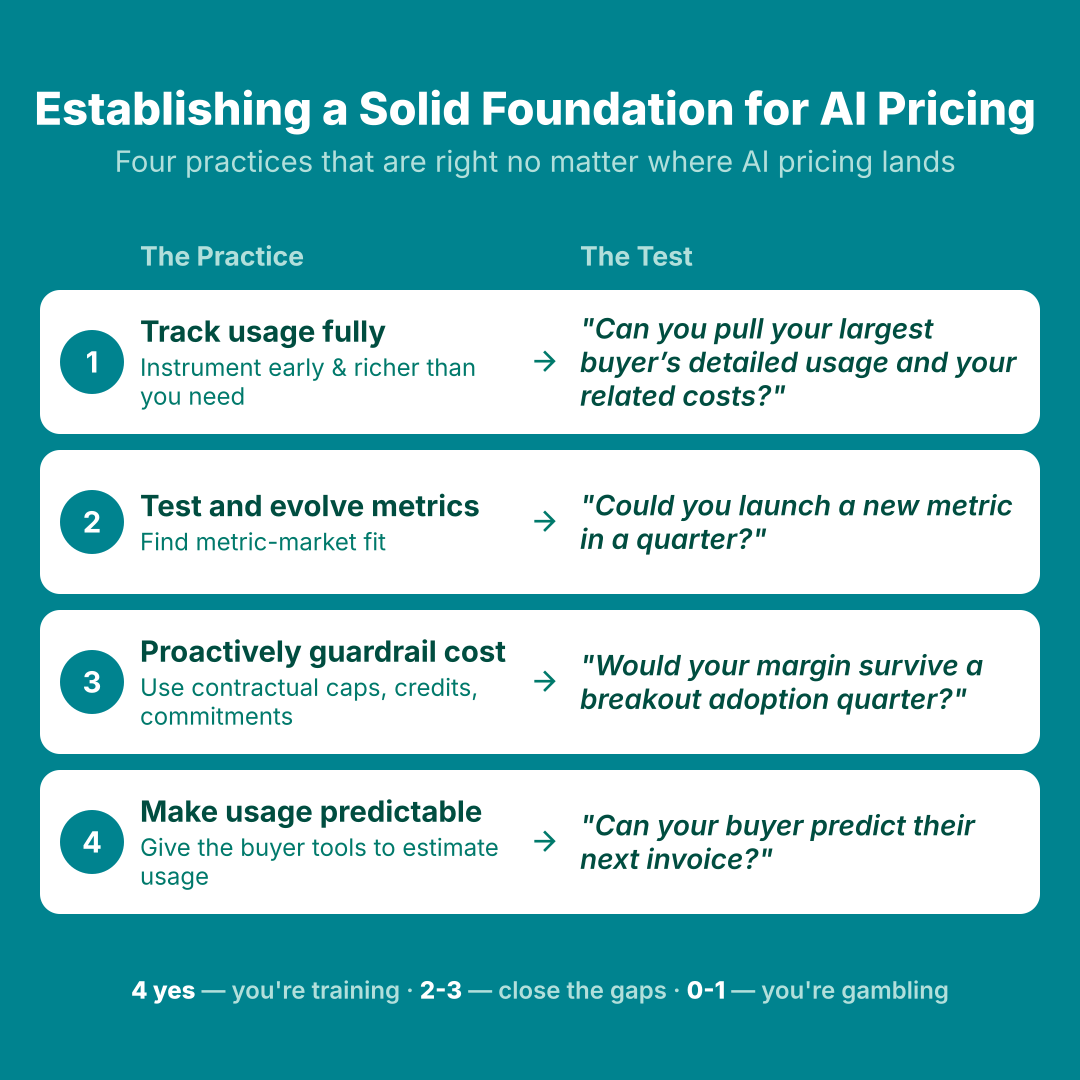
A single decisive move won't win this new pricing game. Instead, it will be won by companies that adopt a forward-looking pricing foundation. And that starts with four no-regret practices.
- Track usage fully. Build instrumentation before you need it, and richer than you think you'll need. Connect these data to your commercial systems. Customers will want to see usage in ways you can't predict today. Retrofitting usage-tracking under competitive pressure breaks customer confidence and relationships.
- Test and evolve your metrics. Seats, tokens, outcomes: your metric evolves as your product does. Find metric-market fit through co-development with customers and partners. Invest in a CPQ system that can onboard new metrics quickly.
- Proactively guardrail cost. Now that costs are material and volatile, a quarter of great adoption can quietly become a margin crisis. Protect yourself with contractual caps, credits, or commitments and refine it all later.
- Make usage predictable for your buyer. Their real fear isn't price — it's an unexpected invoice. Provide usage calculators, in-product visibility, and threshold alerts. A thoughtful estimate will get procurement the confidence to sign.
Companies that build these compounding practices are training. Companies that simply pick a pricing model are gambling. As the game takes shape, well-trained beats lucky every time.