Software packages used to solve for the buyer and the seller. The buyer could count the units needed. Per seat worked because it was loosely correlated with cost, and a human user could only consume so much. Nobody could use their way into inverting your unit economics.
GenAI broke that solution from both sides. What the package delivers now varies, which is the buyer's problem. What it costs to deliver varies too, and that one is yours. A month of usage can spike costs well past what your pricing assumed.
A package sets the price and makes a promise, and that promise decides who assumes the risk of unexpected costs.
Two possible shapes to this promise.
The buffet is an outcome guarantee, like resolutions delivered, tickets closed, documents processed. You've answered the buyer's quantity question and assumed the cost risk. They can and do pay a premium for the certainty. À la carte is a capacity guarantee, like credits or runs or entitlement. If the buyer is still hungry, they have to order more.
GitHub Copilot ran out of ingredients. $10 per seat was buffet pricing. Usage scaled and cost followed. By June 2026, usage credits moved the risk to the developer, who could burn a month of credits in hours. The first model cost Microsoft margin and the switch cost it trust.
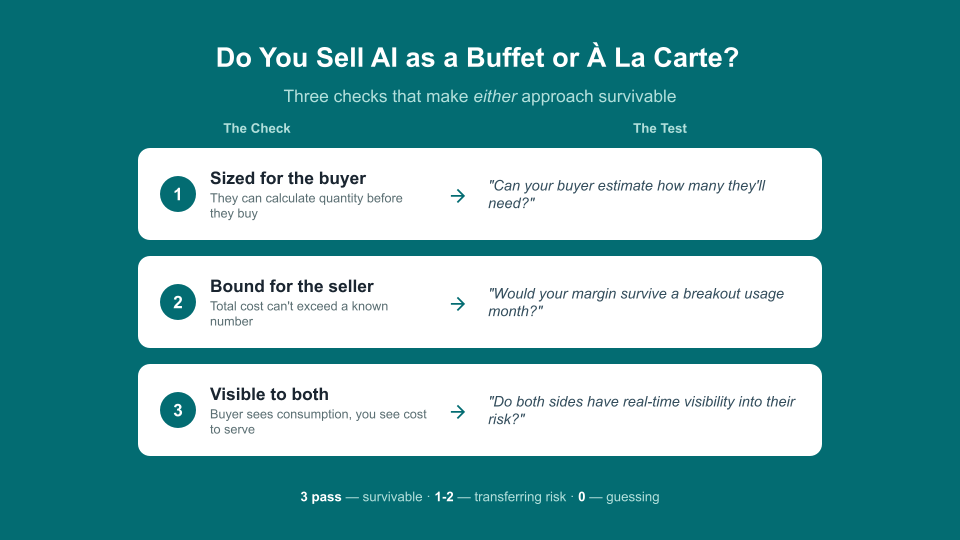
Three checks make either approach survivable.
- Sized for the buyer. They can calculate quantity before they buy. Tasks, resolutions, documents. Never tokens.
- Bound for the seller. There's a number your total cost can't exceed, known before the month starts.
- Visible to both. The buyer sees consumption, you see the cost to serve against revenue. Both updated in real time.
You won't size it right on day one. Know which of the three you shorted, say so, and adjust in short cycles.