For twenty years, "don't do cost-plus pricing" was easy advice. At 80% software margins, marginal cost could be mostly ignored by pricing teams.
Generative AI ended that. Inference is material, volatile, and rises with the very usage that creates value. Cost has a new role in the pricing conversation now. And the reflex is to hand it the steering wheel. Charge per token. Let cost drive the price.
That reflex gives away margin. The moment you anchor price to a commoditizing input, you have set a price ceiling.
Cost does have a real pricing job. Two, actually: guardrail and signal.
Job 1: Cost establishes guardrails.
- A floor price per unit you never go below. Take your 90th-to-95th percentile "normal" account, the most costly one you'd sign, add your minimum margin, and refuse to negotiate below that floor without an agreed-upon strategic reason.
- An expansion metric that kicks in once customers exceed what's included. Zendesk includes a set number of AI resolutions in each tier and charges $1.50 for each additional resolution.
- Secondary limits embedded inside your primary metric that trigger additional charges when usage patterns turn abnormal. GitHub Copilot sells a seat but meters premium AI requests behind a monthly credit allotment.
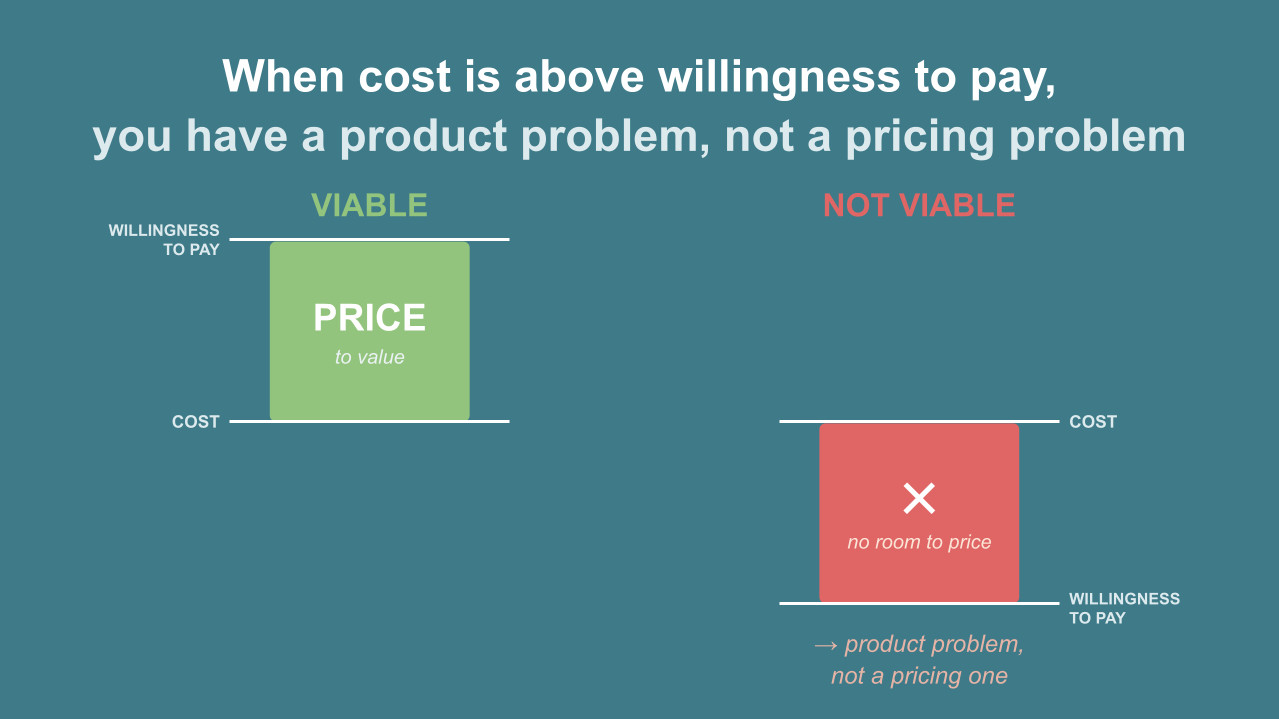
Job 2: Cost signals product viability.
- If your cost-based floor is higher than what the customer will actually pay, you don't have a pricing problem. You have a product problem — and no metric fixes that. Anthropic's $200 Claude Max plan reportedly loses money on heavy users; their response wasn't a clever new metric, it was rethinking what capabilities that tier includes.
Cost never touches the steering wheel. Value does. And value drives the price towards what the finished work is worth to the buyer. That said, pricing teams should still look to cost when setting guardrails. And product teams should look to it when determining viability.
Cost-based guardrails, never cost-based pricing.